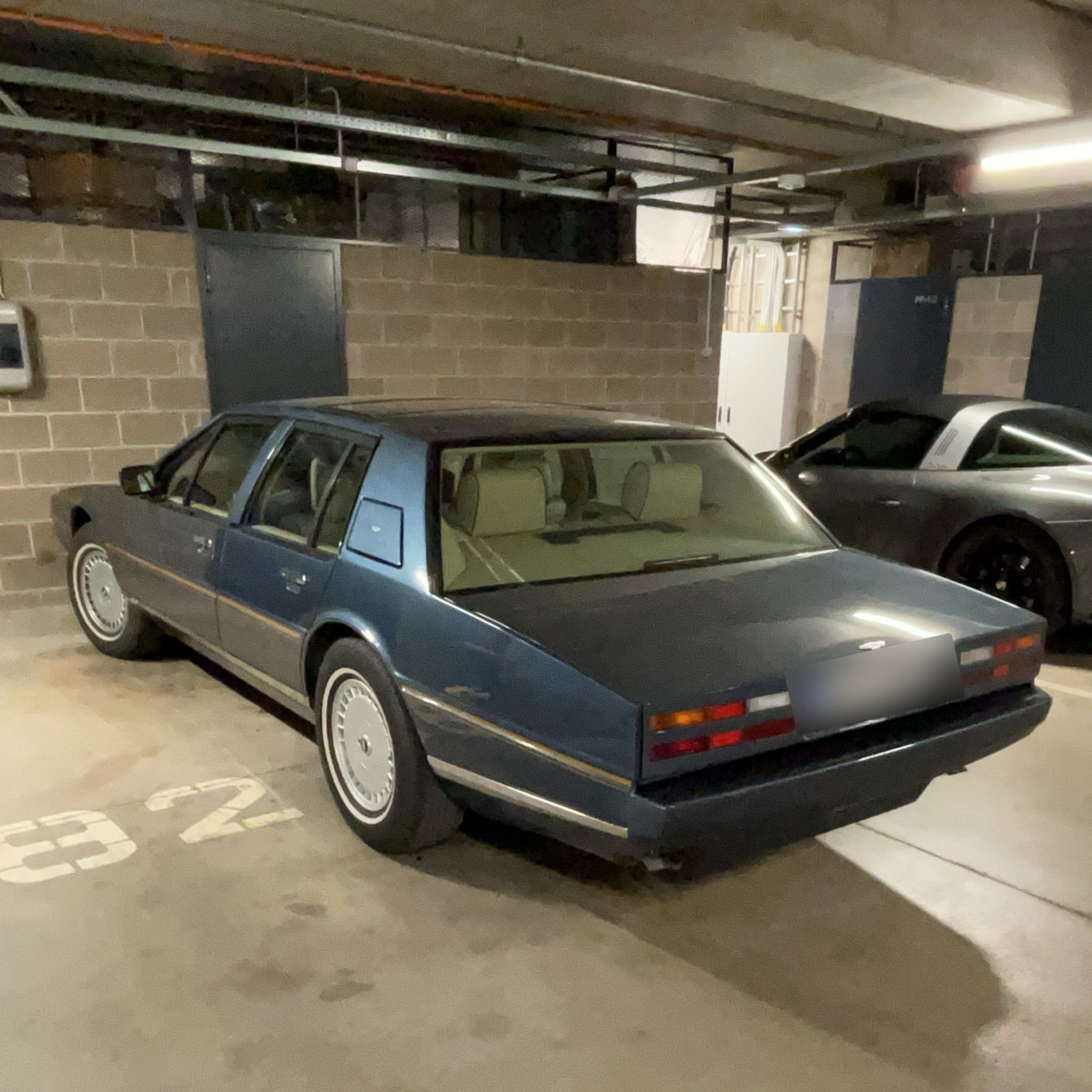
Some cars you spot. Some cars you find. This week's winner was hiding in an underground garage — a blue Aston Martin Lagonda Series 2, parked like it was just another commuter. It is very much not another commuter.
Folded paper, full send
When the Lagonda landed at the 1976 London Motor Show, nothing on the road looked remotely like it. Designer William Towns drew a saloon the way you'd fold a paper plane: one long wedge, razor edges, a bonnet you could land a glider on. Half the world called it the future, the other half called it madness. Both were right.
The dashboard that ate the budget
Under the skin sat an even bolder gamble: the Lagonda was the first production car to ship with a digital instrument panel — LED readouts and touch-sensitive switches in 1976, a decade before that was sane. Developing the electronics reportedly cost several times the budget planned for the entire car, and delayed first deliveries until 1978. Owners learned patience; the dashboards learned new ways to fail. Nobody cared. Royalty queued up anyway, and the deposits famously helped keep Aston Martin alive through its roughest decade.
Rarer than it gets credit for
Every Lagonda was hand-built at Newport Pagnell — thousands of hours per car — around a 5.3-litre V8 with roughly 280 hp pushing two tonnes of British geometry. Across 14 years, only about 645 Lagondas were ever made, with the Series 2 accounting for the biggest share. For decades it sat on "ugliest cars ever" lists; today the same wedge is climbing collector charts, because nothing this brave gets built twice.
The spot
That's what makes this find so good: a car this rare and this strange, casually tucked between concrete pillars. No show, no auction tent — just street-spotting luck at its purest. Exactly what the game is about.
Eyes open. The next ghost of the seventies might be parked one level below you.